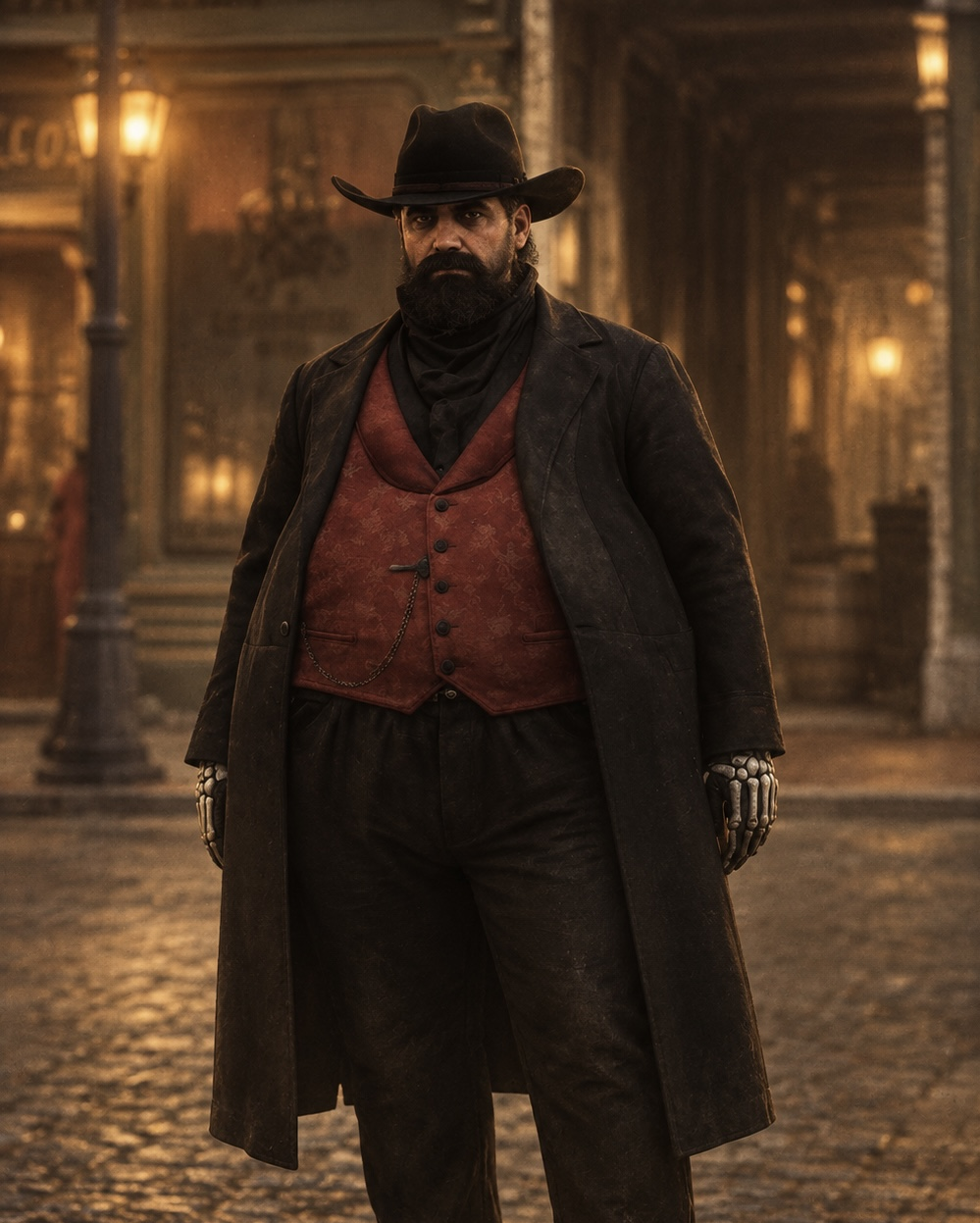
Joe Gholson
Joe Gholson was born in 1838 into a family that believed the law was the foundation upon which civilization was built. He was raised in a respectable household where justice, honor, and duty were not merely words, but principles by which a person was expected to live. His father served as a judge, a stern but fair man who believed that no individual, regardless of wealth or reputation, stood above the law. His mother was an attorney, a sharp-minded and determined woman who devoted her life to defending the innocent and ensuring that every person received a fair hearing. Together, they raised Joe to understand that justice was not always easy, nor was it always popular, but it was necessary for a civilized society to endure.
From a young age, Joe spent countless hours observing his parents' work. He watched his father preside over court proceedings and his mother argue cases with conviction and resolve. Their home was one of discipline, learning, and respect for the law. It was their hope that Joe would one day follow in their footsteps and carry forward the principles they had spent their lives defending.
Tragedy struck while Joe was away attending law school. His father had presided over the trial of a notorious gang leader, a man whose crimes had brought misery and fear to the communities under his reach. After a lengthy proceeding, Joe's father sentenced the man to death, believing that justice demanded no lesser punishment. The gang leader's followers, consumed by hatred and a thirst for revenge, sought to punish the judge for the verdict he had delivered.
Unable to reach the man they blamed for their leader's fate through the courts, the gang turned its vengeance upon his family. Joe's parents were brutally murdered, their lives taken by men who believed revenge mattered more than the law. By the time word reached Joe, there was nothing left for him to do but return home and bury the two people who had given him everything he knew about honor, justice, and duty.
The loss broke something inside Joe that would never truly heal. He had been away pursuing the very calling his parents had encouraged, only to return and discover that the principles they had devoted their lives to defending had failed to protect them from those who despised the law. For a time, grief threatened to consume him. But as he stood at their graves, Joe made a solemn promise: he would finish his education, find his way to the bench, and spend the remainder of his life administering justice for all. He would not allow the men responsible for his parents' deaths to turn him into a man ruled by vengeance. Instead, he would honor his parents by becoming the kind of judge they had raised him to be.
Upon graduating from law school, Joe began the difficult journey of establishing himself in the legal profession. He carried his parents' teachings with him, believing that a judge must remain impartial, that every accused person deserved a fair trial, and that the law must be applied equally to the powerful and the powerless. Yet the American frontier was a harsh place, and the ideals Joe held dear were not always welcomed by those who profited from disorder.
Over the following decades, Joe traveled from territory to territory, seeking opportunities to serve on the bench. He witnessed towns rise from nothing, establish their laws, and promise their citizens a better future, only to watch corruption, violence, political infighting, and economic hardship tear them apart. Some territories lost their leadership, others abandoned their principles, and still others simply crumbled under the weight of lawlessness. Each time a territory failed, Joe found himself packing what little he owned, saddling his horse, and setting out once more in search of a place where justice might endure.
Life on the road hardened him. He learned to live off the land, endure bitter winters, cross unforgiving country, and sleep beneath the open sky. He became a weathered man, carrying the scars of a difficult life and the quiet exhaustion of someone who had watched too many promising beginnings end in ruin. His years of travel taught him that a badge, a courthouse, and a book of laws meant little without honest people willing to uphold them. He also learned that a judge's duty was not to guarantee that a territory would survive, but to ensure that while it stood, its people had access to justice.
Now, at fifty-four years of age, Joe Gholson continues his search for a place he can finally call home. He has no desire for riches, political influence, or personal glory. He seeks something far more difficult to find on the frontier: a territory governed by sound principles, led by people of integrity, and populated by citizens who understand the value of law and order.
Joe knows better than most that no territory is guaranteed to last forever. He has seen too many fall to make such a promise lightly. Nevertheless, he remains hopeful that somewhere beyond the next ridge lies a community determined to build something lasting, a place where its courts will remain open, its laws will be respected, and its people will not have to live in fear of those who believe themselves above justice.
Should he find such a territory, Joe intends to offer it the years he has left, serving faithfully as a judge and helping establish a justice system strong enough to withstand the troubles that have destroyed so many others.
He carries his parents' memory with him wherever he travels, and though time has weathered his face and hardship has hardened his spirit, their lessons remain unchanged. He will not seek revenge in their names. He will seek justice in their honor.
For Joe Gholson, the journey has never truly been about finding a courtroom or securing a title. It has always been about fulfilling a promise made long ago to two people who believed the law could make the world a better place.
And until the day he finds a territory worthy of his service, Joe Gholson will keep riding.
For justice, for honor, and for the hope that somewhere on the frontier, the law might finally find a permanent home.